
Follow a change through the code.
The reason for a change may live in a note while its consequences live in the code. Memrain lets a connected coding assistant retrieve both kinds of context.
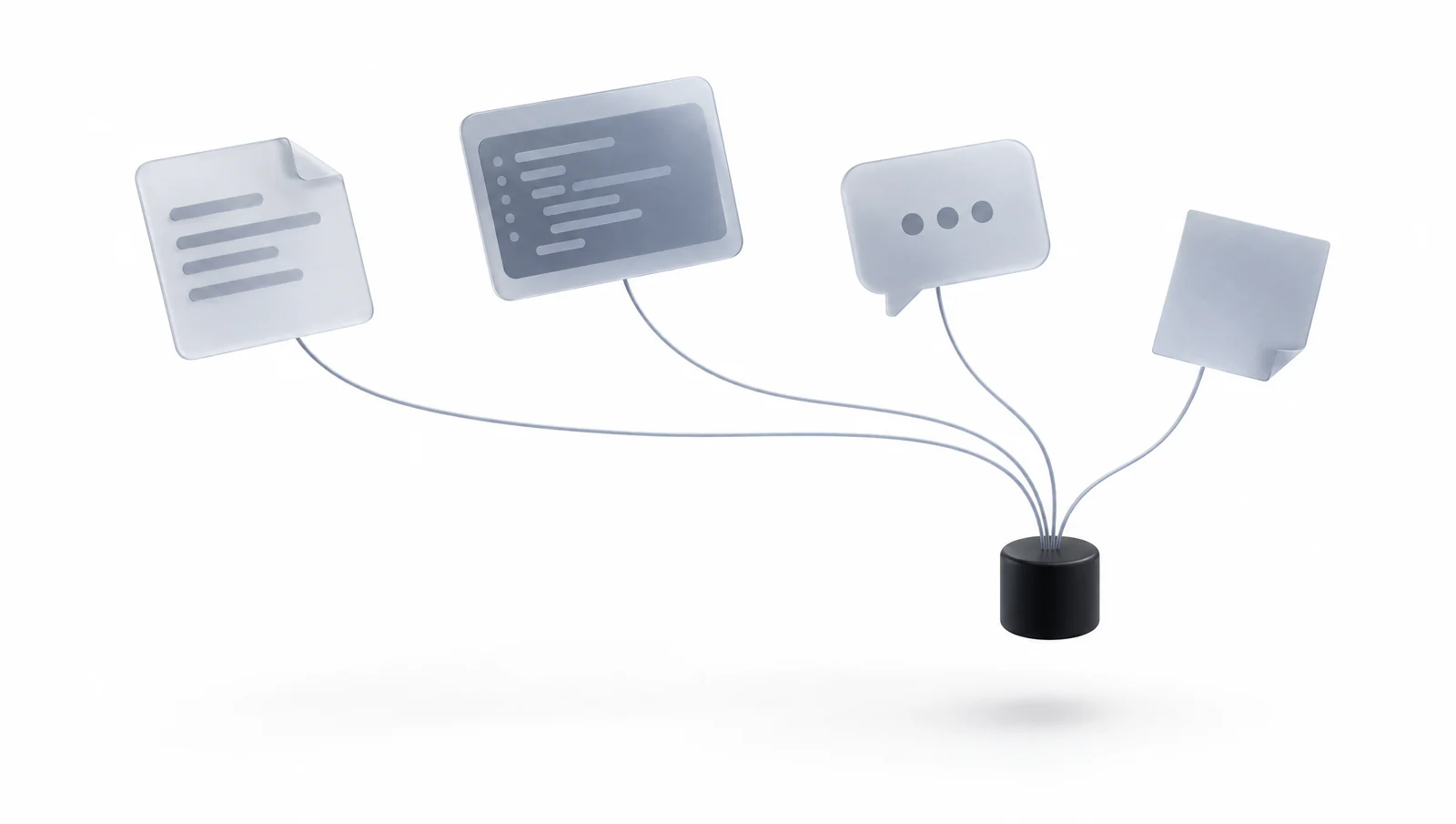
Illustrative example
Who calls this function, and what might a change affect?
Query the indexed call graph for direct and transitive callers, then inspect the definitions and related decision notes.
Illustrative scenario, not a live product result.Navigate definitions and references.
Code tools can locate a symbol, find its references and inspect its callers or callees. The code graph supports TypeScript, Python and Go; Bash and SQL content can also be searched. The operator chooses which checkouts are indexed. This gives an assistant a structured starting point for investigation, while the repository remains the place to verify the current implementation.
Understand the paths around a change.
Blast-radius queries walk transitive callers, and flow queries follow callees from an entry point. They help reveal related functions that a text search may not organize clearly. The result can guide which files to inspect and which behavior to test. It does not replace running tests, reviewing dynamic behavior or checking whether the indexed checkout matches the branch being changed.
Treat incomplete graphs as incomplete evidence.
Code queries report readiness and can expose truncation or degradation. An empty result from an index that is not ready is unknown, not proof that nothing calls the function. Generated code, runtime dispatch and unsupported languages also require ordinary repository investigation. Use the graph to make exploration more focused, then verify the important paths in source and tests.
Keep the context. Move the work forward.
Connect your knowledge to the AI you already use. Find your starting point and make the next conversation count.