
Give the team a shared starting point.
A decision should remain useful after the meeting ends. Memrain lets a small team search shared material from the AI clients they already use, alongside sources set aside for each person.
Illustrative example
Why did the team choose this deployment approach?
A teammate’s assistant retrieves the shared decision record and runbook, subject to that teammate’s source access.
Illustrative scenario, not a live product result.Share knowledge across different clients.
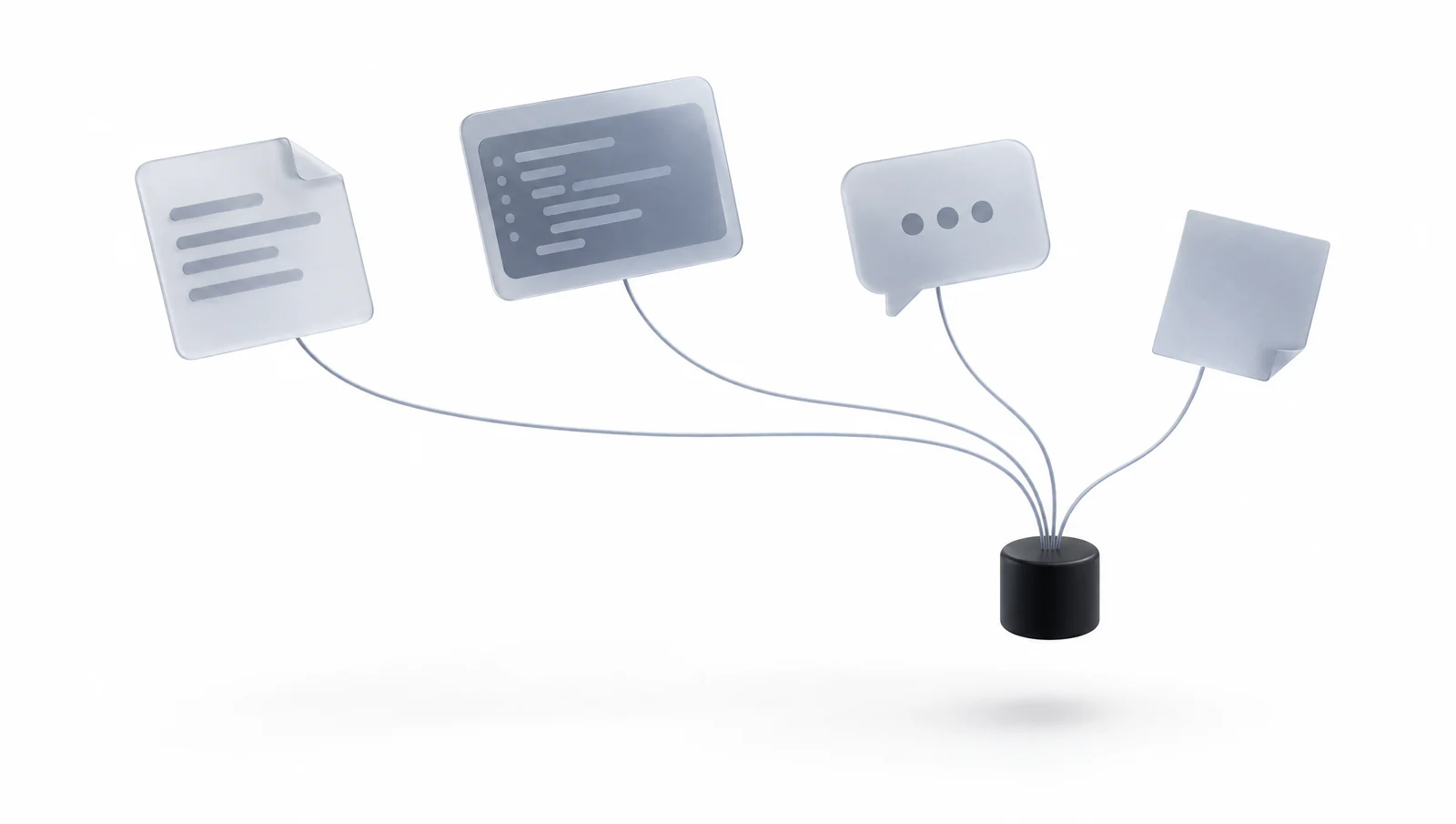
A team source can contain the runbooks, decisions and project notes that everyone needs. Add it to the appropriate read grants so a person using Claude can retrieve the same evidence as someone using Codex. Shared memory does not require everyone to move their conversations into a new chat application. The source remains separate from the answers each client produces.
Enroll people and manage access individually.
A supported organization connector can use a one-time enrollment code for each person. Personal access tokens are another option. An operator assigns sources, sets model-spend limits and can revoke one person without disconnecting everybody else. Private sources and shared read sources should be checked with real example pages before the team starts relying on them.
Begin with a bounded pilot.
Current team separation is enforced in the application and documented as pilot-grade. It requires fail-closed tenant configuration and Dynamic Client Registration left off. There is no SAML, federated OpenID Connect login or SCIM user synchronization. Start with a few people and non-sensitive material; use separate deployments when your requirements call for stronger separation.
Keep the context. Move the work forward.
Connect your knowledge to the AI you already use. Find your starting point and make the next conversation count.